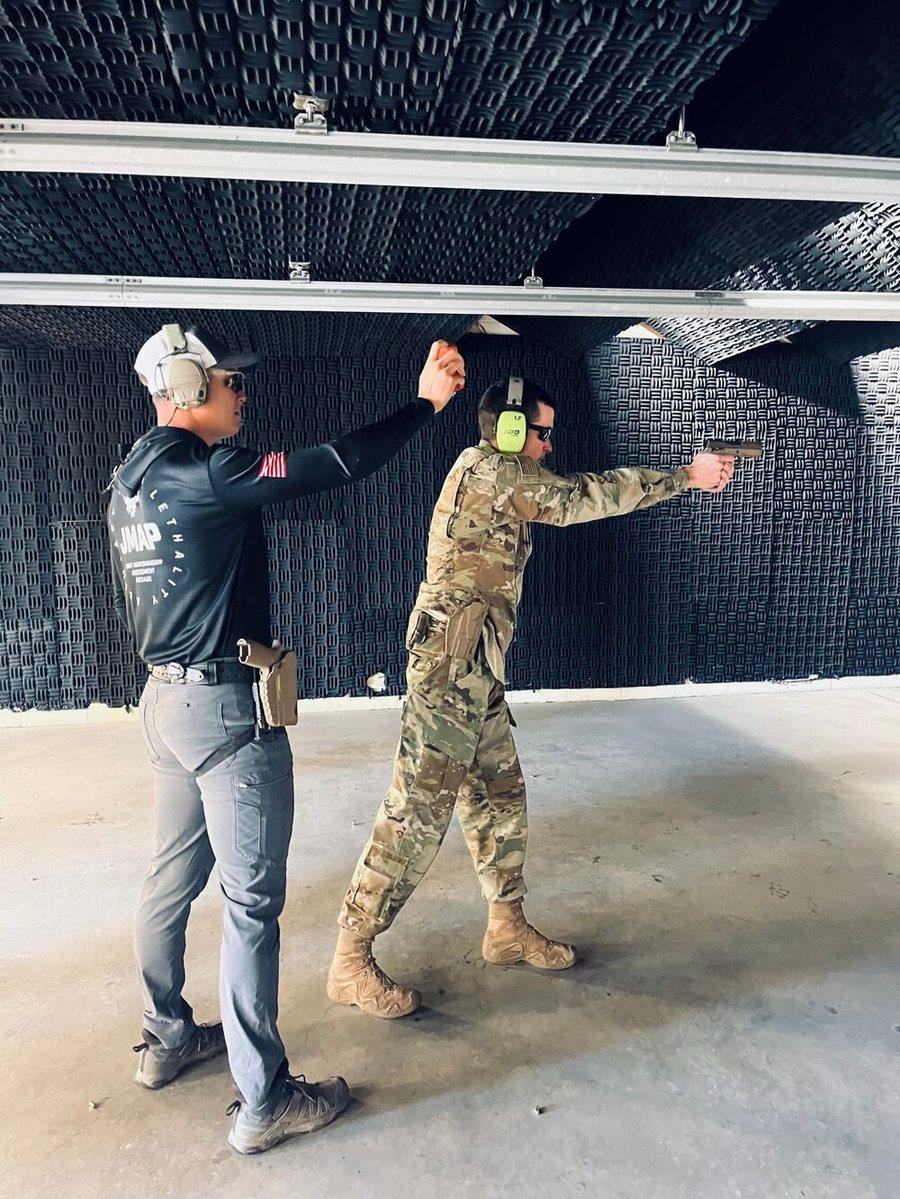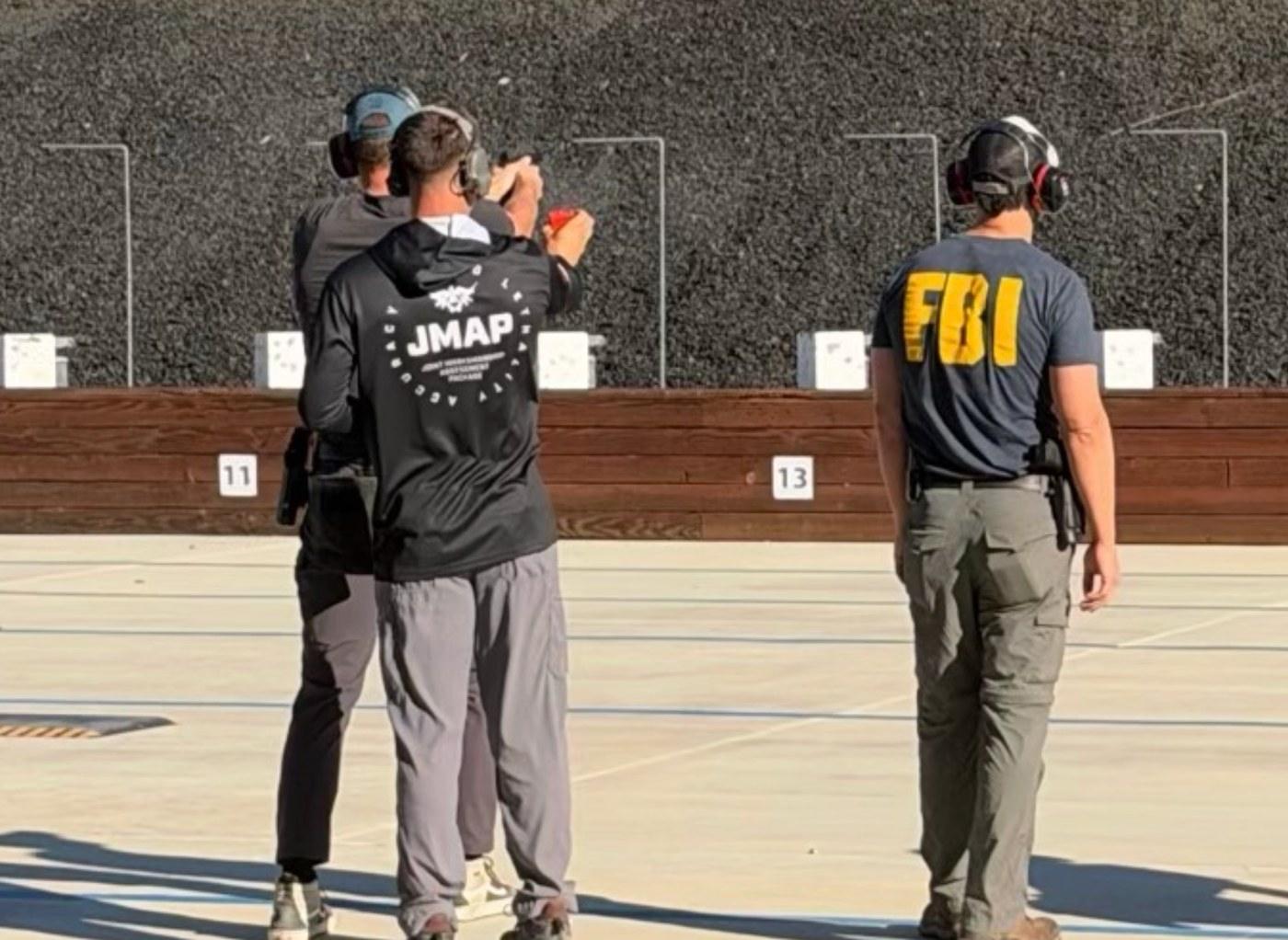
Hit Factor is points divided by time. A shooter who scores 90 points in 4.5 seconds beats a shooter who scores 90 points in 9 seconds, because the first one stopped the threat twice as fast. Every reason below follows from that one change in how a string of fire is scored.
-
Speed and accuracy count as one score
On most qualifications, time is a limit to stay under and accuracy is the score. Shooters learn to use every allowed second. Hit Factor puts both in the same number, so a fast miss and a slow hit cannot cover for each other.
Instructors in the field have been making the same argument for years: points per second is a better statement of what you want from an officer than a perfect score shot slowly.
Try the sliders -
Keep your qual. Add an assessment.
Nobody has to rewrite policy to start. Scoring Tech runs a time-and-accuracy assessment alongside the qualification you already shoot. Same course of fire, same standards, same paperwork.
Each shooter gets a Hit Factor on top of the pass or fail. You see who is fast, who is accurate and which skill to work on next. When leadership is ready, Scoring Tech can help convert the qual itself, the way it did with the Marine Corps.
No rip and replace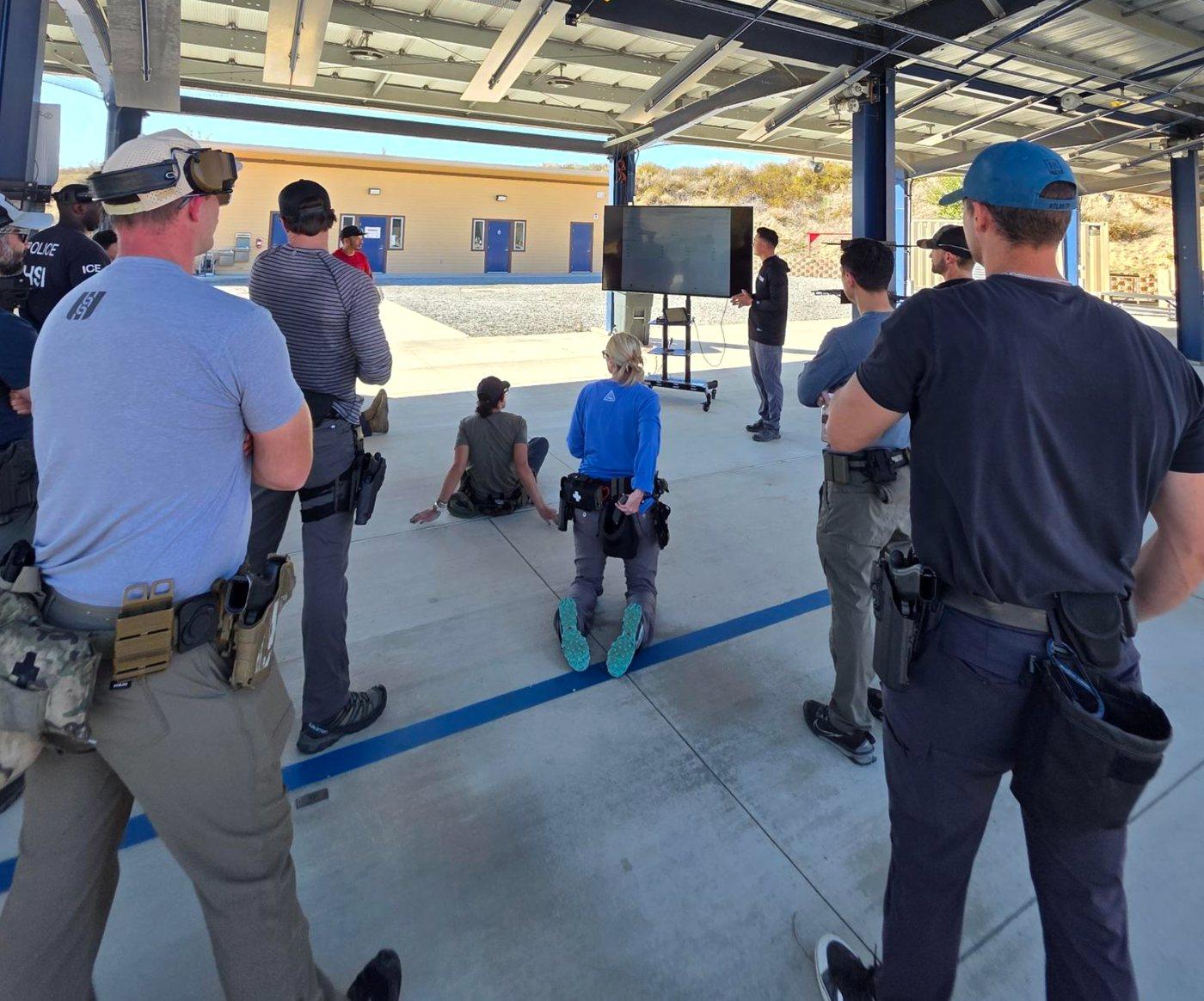
Results are briefed on the range, right when the shooting stops. -
A pass tells you almost nothing
A qualification is a minimum standard. Writers who train officers point out that most departments stop there, and many officers only practice at qualification speed, not at the speed of an actual shooting.
The Marine Corps ran into the same wall. Under its old rifle table, a Marine had two minutes to fire 30 rounds, and the final score said nothing about how fast the hits came or which distances were hardest. The 2018 review that followed is what pushed the Corps toward timed, hit-based assessment.
Same pass, very different shootersIllustrative numbers. Five shooters, one pass-fail result, five very different Hit Factors. Shooter Points Time Qual Hit Factor -
Find the exact skill holding each shooter back
One Hit Factor tells you how someone shot. The measures under it tell you why. Draw to first shot, time between shots, reloads and hit rate each point at a different fix, so instructors can aim coaching at the weak skill instead of repeating the whole course.
That makes a clean loop: score everyone on the same course, diagnose, train the skill, then score again and show the gain.
- Baseline
- Diagnose
- Train
- Re-measure
Draw to first shot
Threat appears to first round. Often the biggest gap between legacy-trained shooters and everyone else.
Splits
Time between shots. A real fight runs near 0.20 to 0.25 seconds per shot.
Reload
How long the gun is empty and out of the fight.
Hit rate
Speed only pays when the hits are there. Push splits too low and this falls.
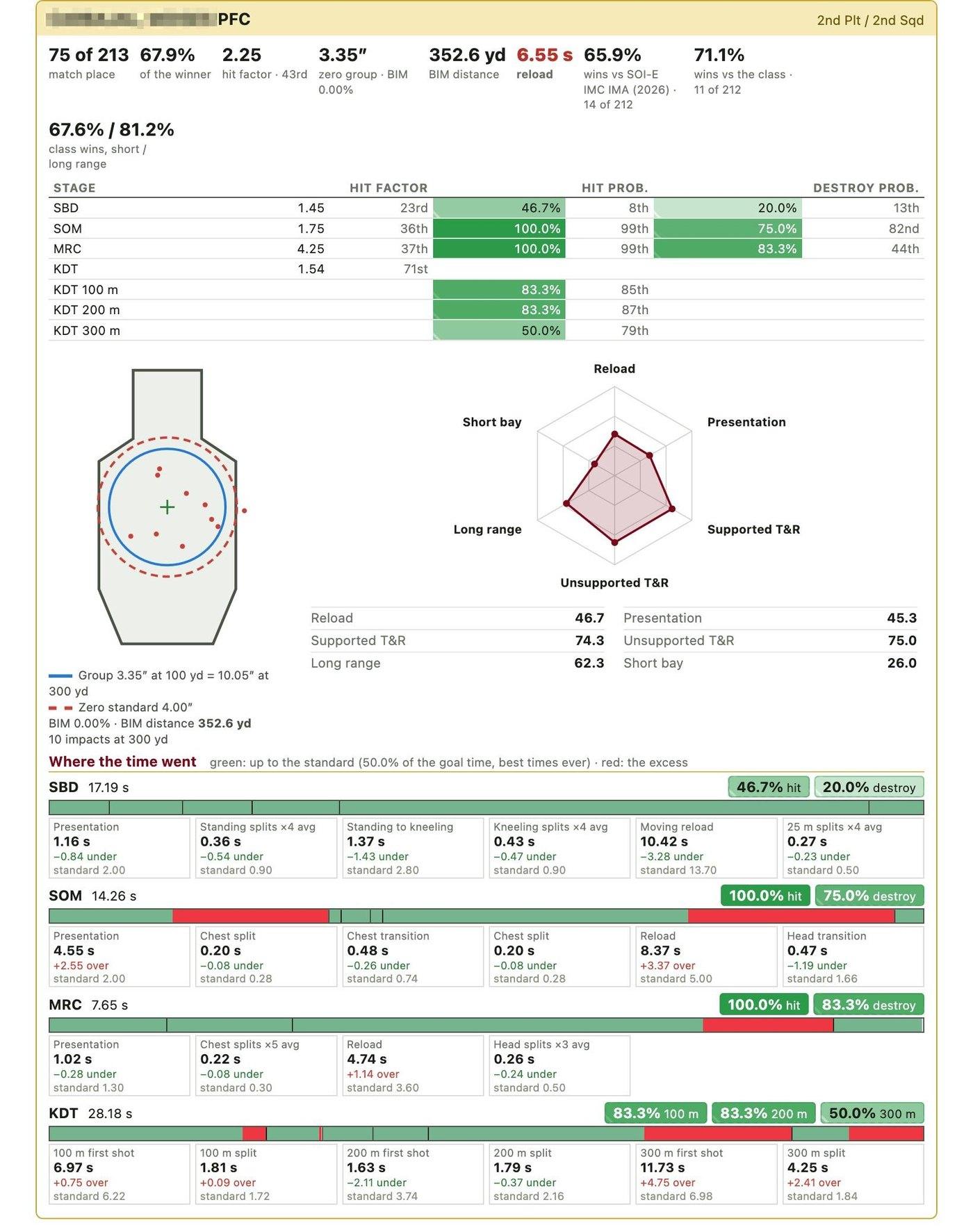
Example student report, name hidden. Scroll to see the full page. -
Compare people, classes, units and years
When everyone is scored on the same scale, comparison gets easy. A new academy class can be set against last year's, one squad against another, one agency against the field. Suggested standards come from real percentiles instead of a guess.
JMAP is built on what Scoring Tech calls the largest marksmanship database in the world. A Marine Corps weapons training leader described the draw: you can pull the data and compare yourself with every infantry Marine course student who has gone through.
Percentiles, not opinions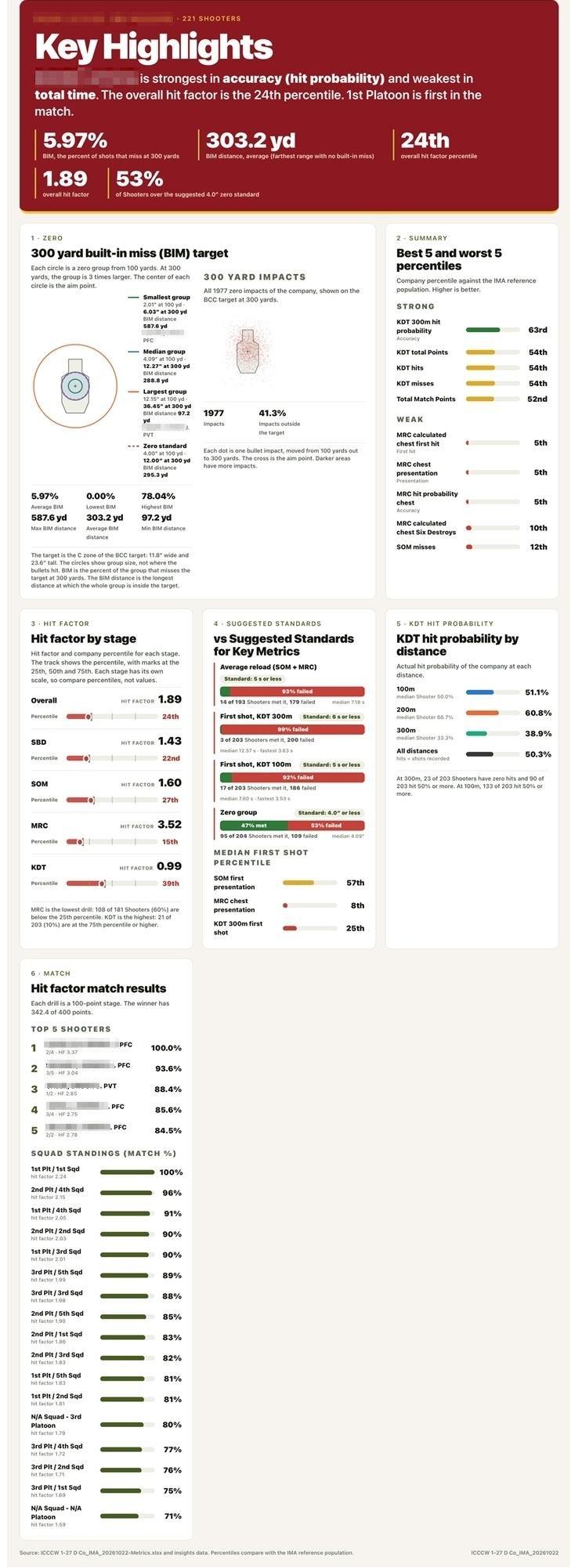
Example unit report, names hidden. Scroll to see the full page. -
Test what you train, shoot and carry
Anything an officer uses or wears can change how fast and how accurately they shoot. With a Hit Factor baseline, you can change one thing and measure what happened. Scoring Tech's research team has done this with red dots, aiming devices, machine guns, the M110, the Next Generation Squad Weapon and SWAT team carbines.
Your next purchase can be decided on data from your own shooters.
Bring us the questionBold items are ones Scoring Tech has tested. The rest are open questions you could test.Red dots at scalePassive vs. active aimingSWAT carbinesMachine gunsM110 configurationsNGSW Pistol opticsTriggersSuppressorsWeapon lightsBody armorPlate carrier layoutHolstersAmmunitionEye and ear protectionLow lightFatigue and stressCourses of fire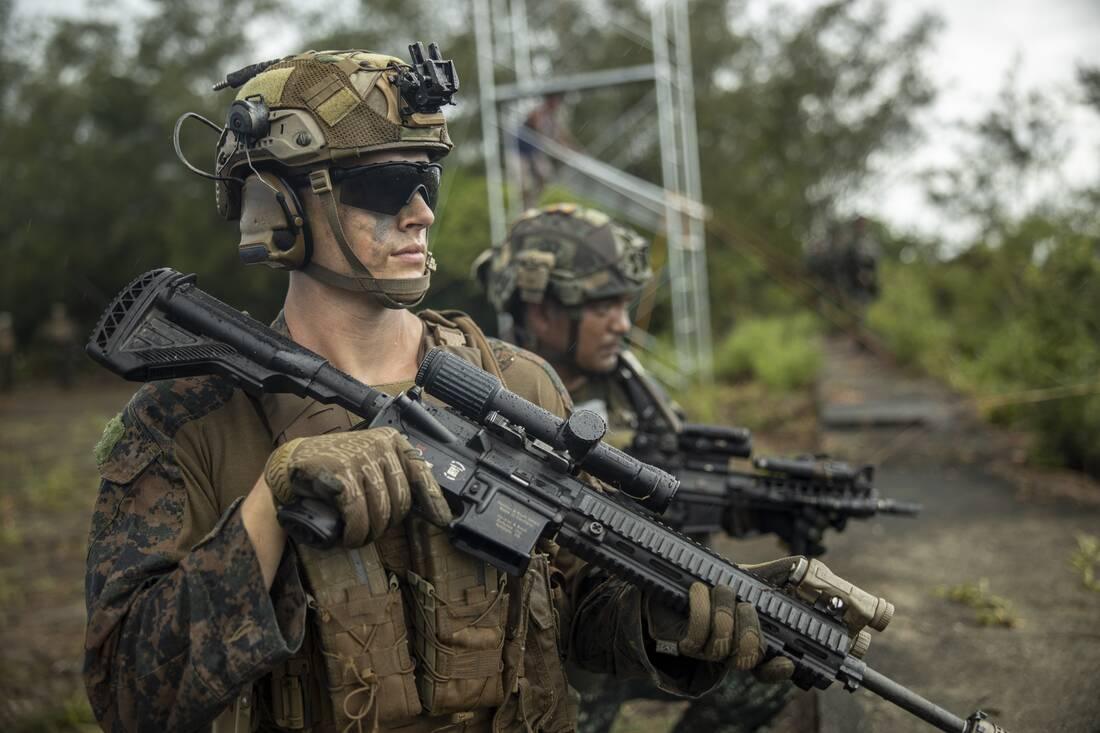
Helmets, optics, plates and eye protection all touch the shot. -
It is proven at scale, and it is defensible
Hit Factor is not a pilot idea. The Marine Corps built its Infantry Marksmanship Assessment around time and accuracy, scored on JMAP, and has said the IMA will become the standard for infantry Marines. Navy researchers reported that automating live-fire data capture saved hundreds of man-hours.
For a chief or commander, that gives you something to show a city council, a training board or a court: objective evidence of training quality instead of a checked box.
Evidence over checkboxes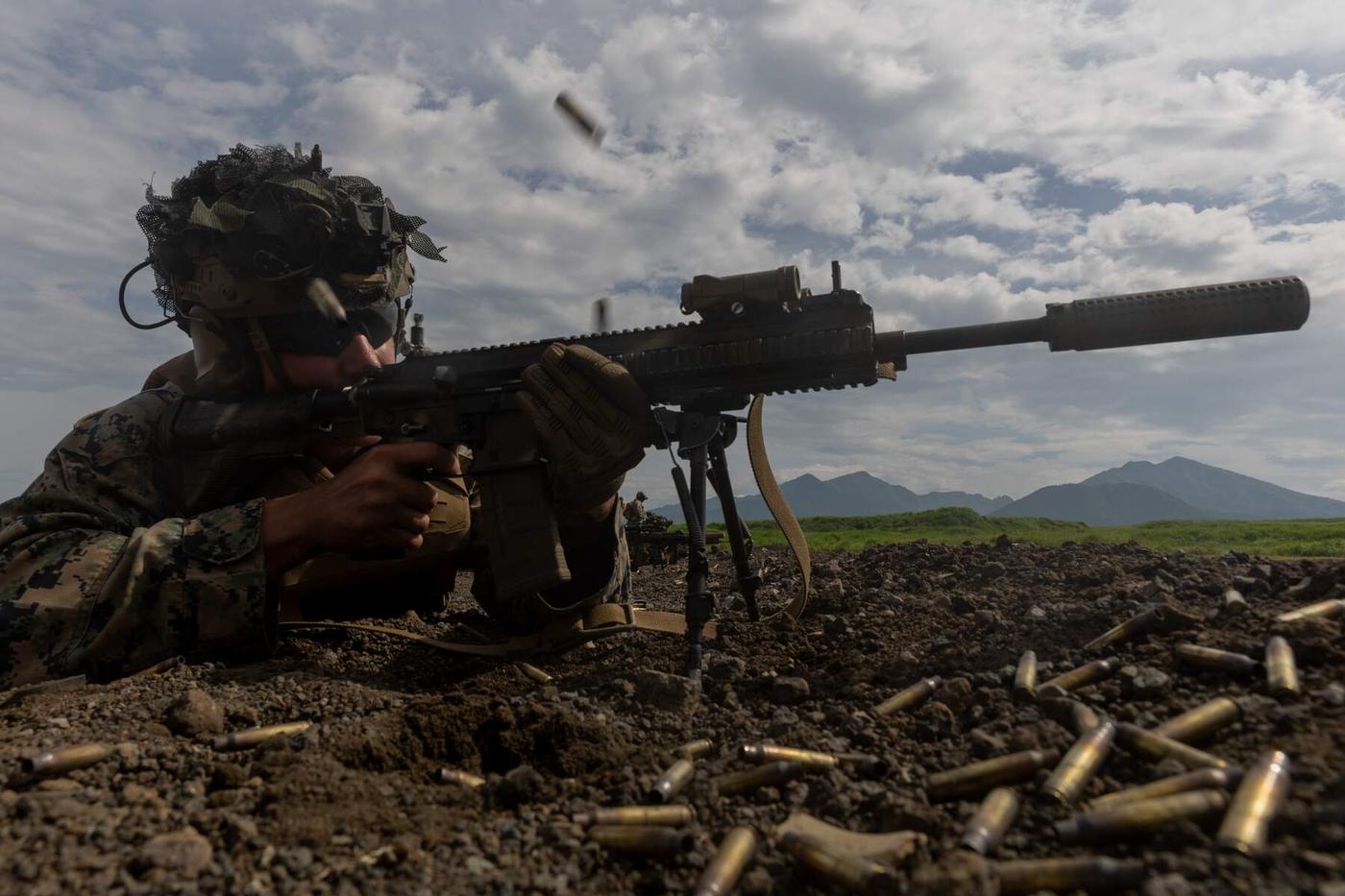
Where it stands Detail 2018 Marine Corps review finds gaps in shooting performance and in what the Corps knew about it. 2022 Navy researchers publish how JMAP captured speed and accuracy data at unprecedented scale. Sept. 2024 Marksmanship Campaign Plan signed, built on measurable lethality metrics. Today Military and law enforcement customers across the services and federal agencies.